FTO
FTO alpha-ketoglutarate dependent dioxygenase (fat mass and obesity-associated)
Incomplete: this record still needs key sources. To do: Add diet-specific interaction studies (e.g. protein or fat intake × FTO) and appetite/food-preference (sensing) studies.
Overview
- Location
- 16q12.2 · chr16:53,701,692–54,158,512 (GRCh38) · plus strand
- Function group
- Appetite and energy balance · Adiposity
- Related genes
- MC4R
- Also known as
- ALKBH9
- Nutrients
- energy intake
- Interactions
- energy-balance, gene-expression
- Databases
- NCBI GeneEnsemblHGNC
RNA demethylase. The obesity-associated variants sit in intron 1 and act largely through long-range regulation of IRX3 and IRX5 in adipocyte precursors, not through FTO protein itself.
Location source: Ensembl REST lookup; cytoband from NCBI Gene. Retrieved 2026-11-23.
Molecular mechanism
From the body to the organ where FTO works, down to the molecules and the gene itself. Click the animation to pause it.
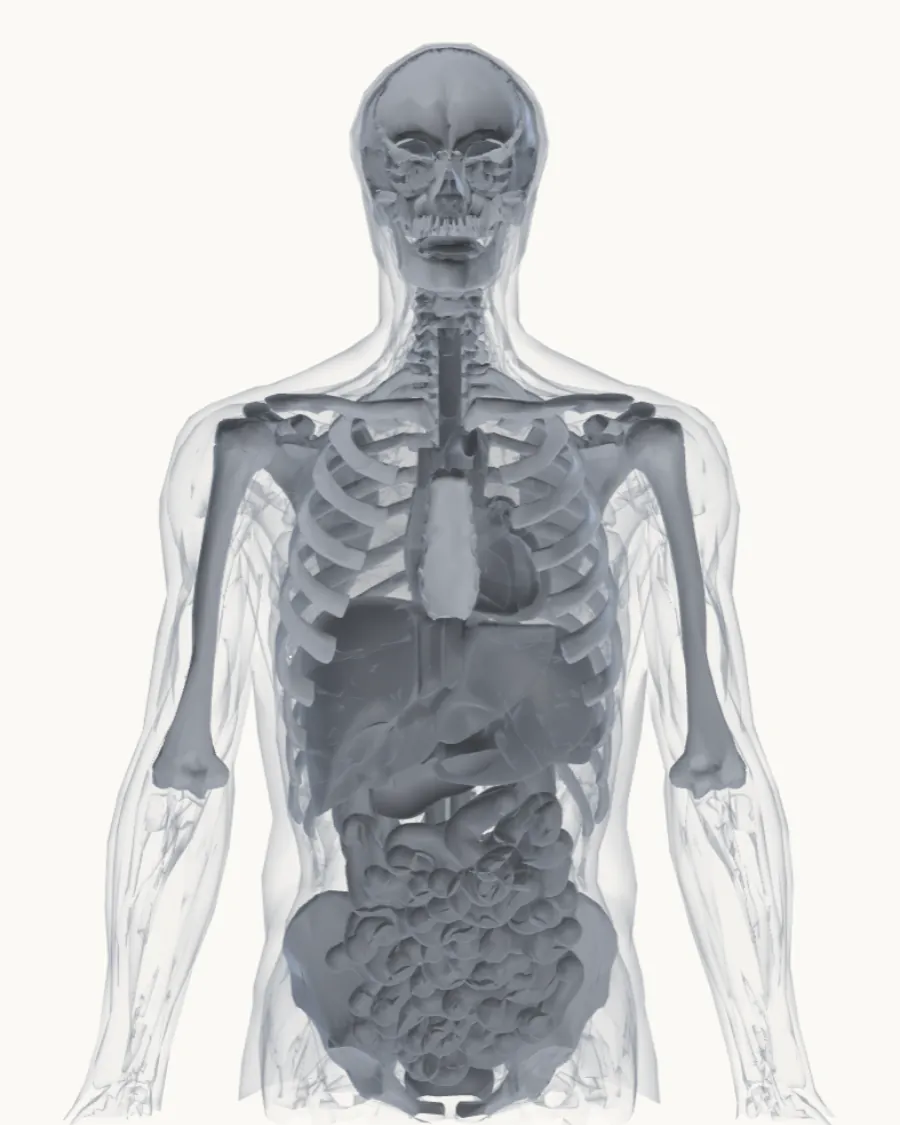
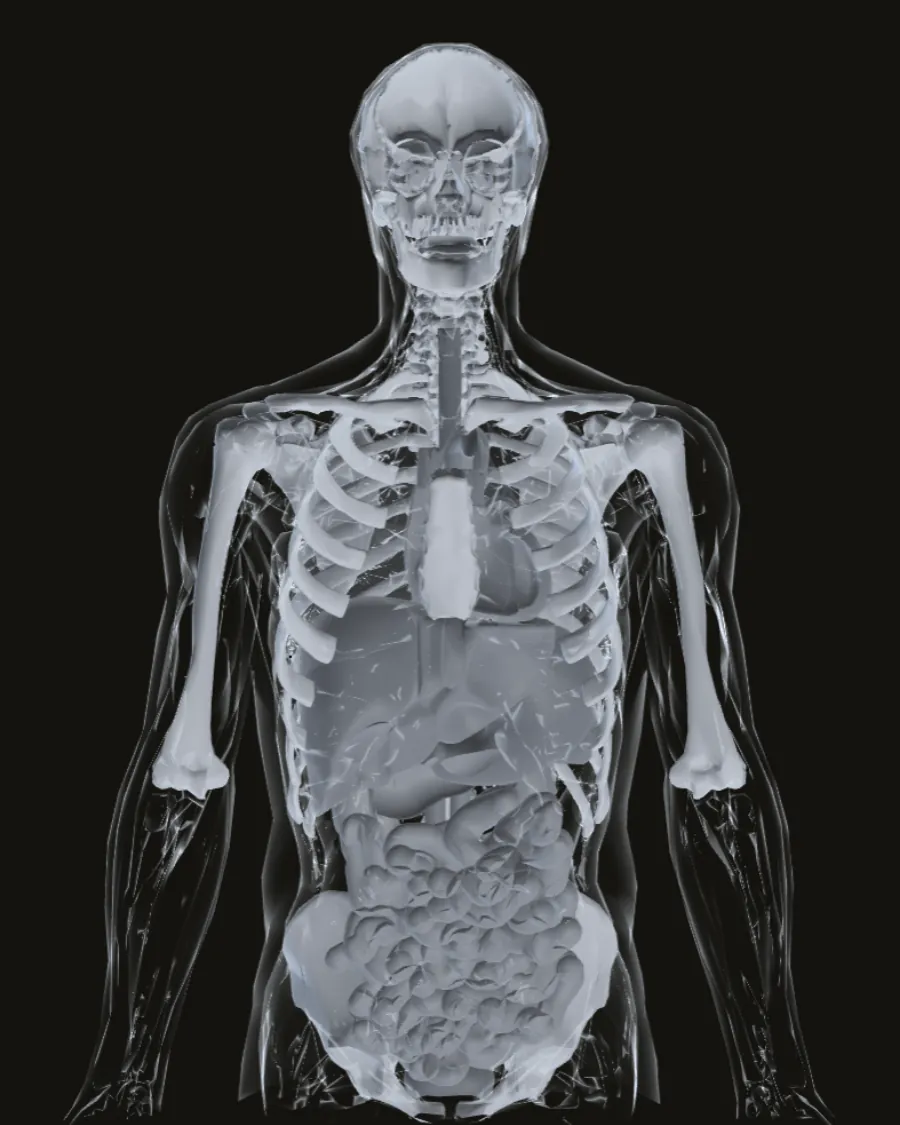
Figure: BodyParts3D, © The Database Center for Life Science, CC BY-SA 2.1 JP; reduced and cropped, with the pancreas and tongue added. The adapted figure is shared under the same license.
- Body FTO holds the strongest common genetic signal for obesity. One well-studied route runs through fat tissue, such as the fat under the skin.
- Tissue Fat tissue is mostly large fat cells, with small precursor cells between them that go on to make new ones.
- Cell A precursor can mature into a white fat cell, which stores fat in one big droplet, or a beige fat cell, which burns fat to make heat.
- Molecule Beige fat cells are packed with mitochondria that burn fat for heat (thermogenesis) instead of storing it.
- Gene FTO sits on chromosome 16 (16q12.2). Its first intron holds an enhancer, a genetic switch that is active in fat precursor cells and controls two genes far along the chromosome, IRX3 and IRX5.
- Gene Normally the repressor ARID5B sits on this enhancer and keeps it quiet. The risk variant rs1421085 T>C changes one letter of its binding site, so ARID5B can no longer hold on.
- Gene The freed enhancer contacts IRX3 and IRX5 across the folded DNA, and early in fat-cell development both are made at about twice the usual level.
- Molecule With more IRX3 and IRX5, precursors turn into white rather than beige fat cells: heat production by mitochondria falls about five-fold and more fat is stored. Correcting the letter with CRISPR in a carrier's fat cells restored it.
Population-specific variants
Alleles are on the forward (genome) strand, with the gene-strand name used in the literature alongside.
Frequency of the effect allele
| Variant | All | AFR | AMR | ASJ | EAS | FIN | MID | NFE | SAS |
|---|---|---|---|---|---|---|---|---|---|
| rs9939609*A | 41% | 48% | 32% | 51% | 16% | 40% | 38% | 41% | 32% |
| rs1421085C · T>C | 31% | 10% | 29% | 51% | 15% | 42% | 38% | 42% | 33% |
AFR African / African American · AMR Admixed American · ASJ Ashkenazi Jewish · EAS East Asian · FIN Finnish · MID Middle Eastern · NFE Non-Finnish European · SAS South Asian. Bold: most common. –: no data. *: see caveat below.
rs9939609Higher BMI and fat mass; each A allele raises obesity odds.
- Position
- chr16:53786615 (GRCh38)
- Region
- intron 1
- Alleles
- T/A
- Effect allele
- A
- Studies
- Frayling 2007, Kilpeläinen 2011
Common in AFR, but there it is only weakly linked to the proposed causal variant rs1421085 (r2 0.054 in 1000 Genomes AFR vs 0.918 in EUR), so it tags less of the effect.
Frequencies: 1000 Genomes phase 3 and gnomAD genomes via Ensembl REST, retrieved 2026-11-23
rs1421085T>CProposed causal variant; disrupts an ARID5B repressor motif, doubling IRX3/IRX5 expression and shifting precursor cells from beige to white fat.
- Position
- chr16:53767042 (GRCh38)
- Region
- intron 1 (adipocyte-precursor enhancer)
- Alleles
- T/C
- Effect allele
- C
- Linkage
- with rs9939609: r² 0.918, D′ 0.996 (1000 Genomes EUR)with rs9939609: r² 0.054, D′ 0.946 (1000 Genomes AFR)
- Studies
- Claussnitzer 2015, Smemo 2014, Laber 2021, Sobreira 2021, Zhang 2023
Frequencies: 1000 Genomes phase 3 and gnomAD genomes via Ensembl REST, retrieved 2026-11-23
Related studies
Frayling TM et al. (2007) · Science 316(5826):889–894
Across 13 cohorts (38,759 people), AA adults weighed about 3 kg more and had 1.67-fold higher odds of obesity.
Kilpeläinen TO et al. (2011) · PLoS Medicine 8(11):e1001116
Physical activity cut the per-allele effect on obesity odds by 27% in adults (OR 1.22 active vs 1.30 inactive); no interaction in children.
Claussnitzer M et al. (2015) · New England Journal of Medicine 373(10):895–907
FTO obesity variant circuitry and adipocyte browning in humans
rs1421085 C disrupts an ARID5B motif, doubling IRX3/IRX5 expression and cutting mitochondrial thermogenesis 5-fold; CRISPR repair restored it.
Smemo S et al. (2014) · Nature 507(7492):371–375
Obesity-associated variants within FTO form long-range functional connections with IRX3
The obesity-associated FTO intron region contacts the IRX3 promoter at megabase distances; the risk SNPs track IRX3 (not FTO) expression in human brain, and Irx3-deficient mice are 25–30% lighter.
Laber S et al. (2021) · Science Advances 7(30):eabg0108
Deleting the rs1421085 regulatory module in mice changed Irx3/Irx5 expression and adipocyte mitochondrial function and reduced high-fat-diet weight gain and fat mass, depending on the fat depot.
Sobreira DR et al. (2021) · Science 372(6546):1085–1091
Extensive pleiotropism and allelic heterogeneity mediate metabolic effects of IRX3 and IRX5
Several variants on the risk haplotype alter enhancers that reach IRX3 and IRX5 in both fat tissue and brain, during a limited developmental window.
Zhang Z et al. (2023) · Nature Metabolism 5(8):1337–1351
The rs1421085 variant within FTO promotes brown fat thermogenesis
In knock-in mice the C allele raised brown-fat thermogenesis through Fto itself, the opposite direction to the human adipocyte work; a reminder that the mechanism is not settled.